


Most people who call us about a commercial roof are not roofers. They are responsible for a building, and the roof is the one part of it they cannot walk out and inspect themselves. It is hard to budget for, hard to judge, and they usually only hear about it once something has already gone wrong.
The leak is over inventory, or equipment, or a tenant’s space. Three contractors give three different answers and the numbers are nowhere near each other. And somebody, a board or an owner or a budget cycle, needs more than a verbal quote before any of it gets approved.
We will tell you what your roof actually needs, including when the answer is that it has years left and a repair will do.
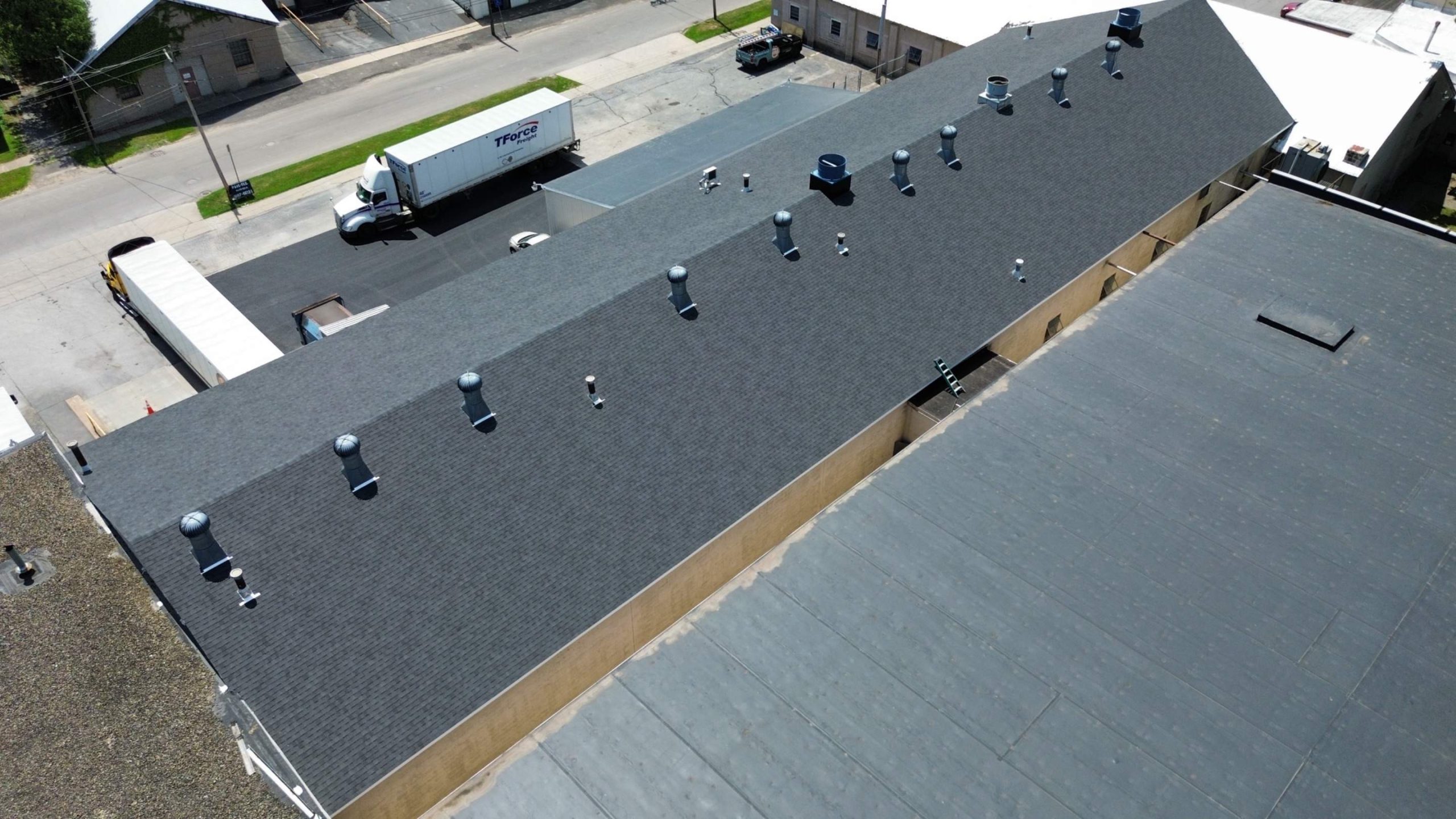
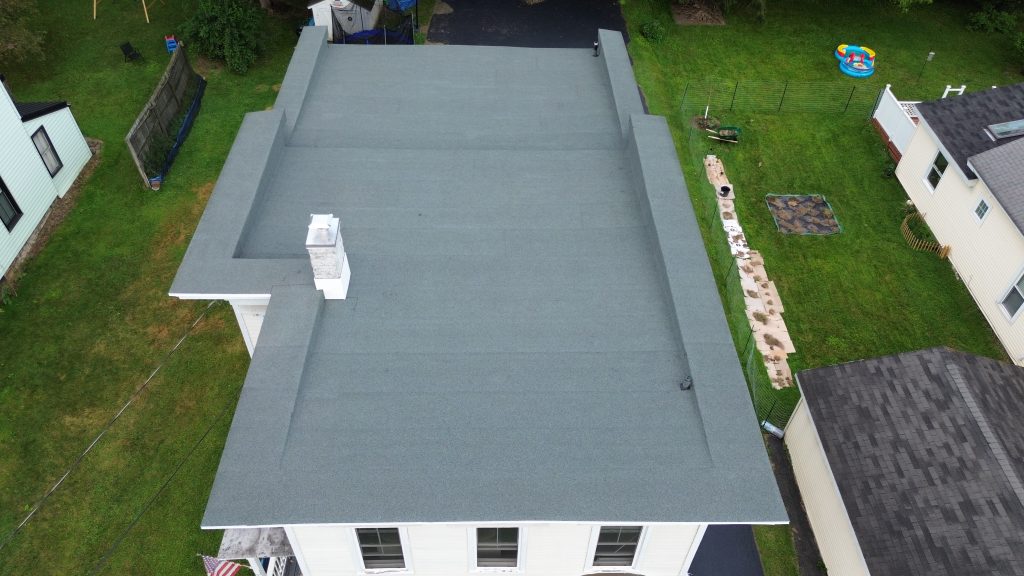
A strong and waterproof commercial roofing option made from asphalt-based sheets with a sticky backing. It’s great for flat or low-slope roofs, easy to install, and holds up well against harsh weather.
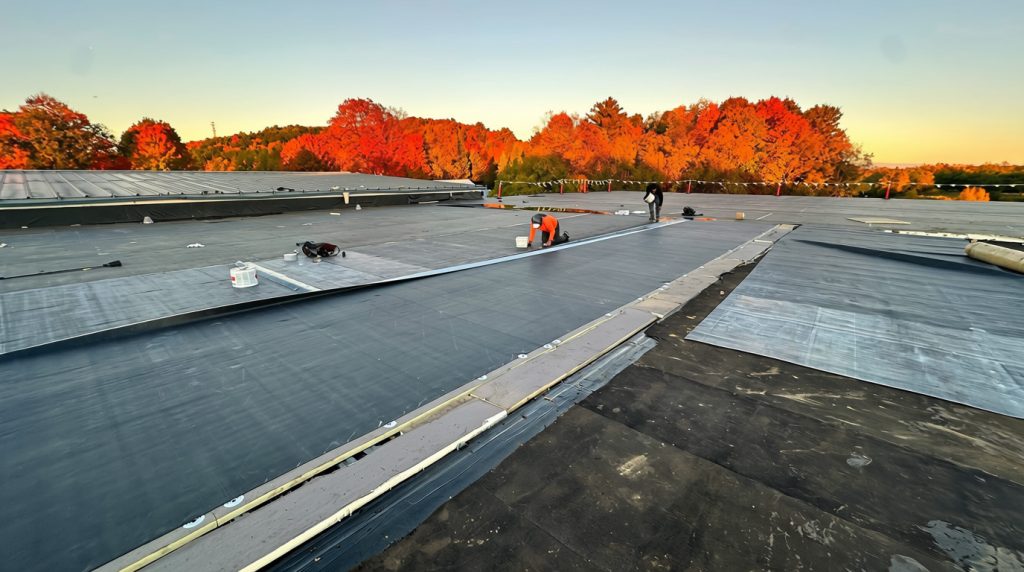
A flexible, rubber-like roofing material that resists sun damage, extreme weather, and wear over time. It’s a budget-friendly choice for flat roofs and can last over 30 years with minimal maintenance.
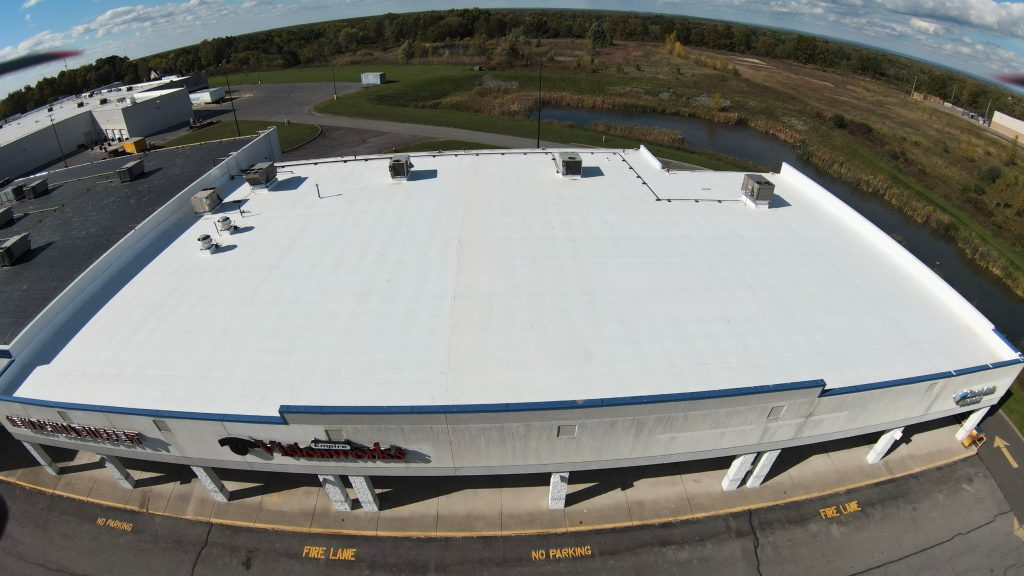
A single-layer commercial roofing material that reflects heat, helping to lower energy bills. It’s durable, resists tears and punctures, and is popular for commercial and flat roofs.
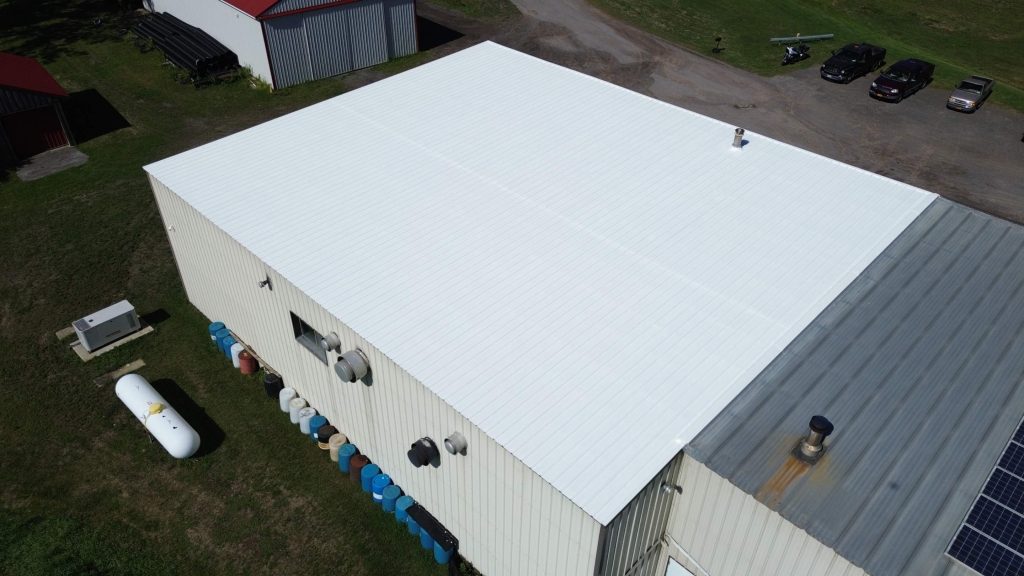
A liquid-applied coating that forms a seamless, waterproof layer over an existing roof, extending its life and improving energy efficiency. We install American WeatherStar systems. Coatings only work when the roof underneath is still sound. If the deck or the membrane has gone, a coating buys you nothing, and we will tell you that rather than sell you one.
Steel panels fastened over your deck, built to outlast everything else we install. Metal sheds snow instead of holding it, which is what you want on a Central New York winter, and it comes in a range of profiles and colors. We will tell you which profile suits your building, and what each one costs, before you decide anything.
A water-based reflective coating. On metal roofs this is what American WeatherStar specifies, and American WeatherStar is the system we are trained on, so on a metal roof this is what goes down. Acrylic does not like standing water. If your roof ponds, silicone is the right answer and we will tell you so. Like any coating, it only works when what is underneath is still sound.

We come out, walk the roof, get into the detail, and photograph what we find. No charge and no obligation attached to it.

The photographs, the condition, and your options laid out plainly: repair it, coat it, or replace it, with the reasoning behind each one. If you need it documented for insurance, a lender, or a budget request, the Roof Health Report gives you that in writing.

Fix it now, budget it for next year, or do nothing at all this year. We work around your operation rather than through it, and we clean up as if the building were still open, because it usually is.
We have been called to commercial roofs that were barely a year old and already had to come off completely. The work was wrong from the start and there was no repair that would have saved it. The building owner paid for that roof twice. Doing it right the first time is the cheaper roof, every time.
Three ways to get a number, depending on how firm you need it to be.
Our instant estimator gives you a range without anybody coming out. Useful when you are putting a figure in next year’s budget.
GET AN INSTANT ESTIMATEWe walk the roof, photograph it, and price what it actually needs. No charge and no obligation either way.
BOOK MY ROOF WELLNESS CHECKThe Roof Health Report documents and scores your roof for insurance, a lender, a board, or a capital budget. $137, credited back if it leads to a re-roof you go ahead with.
ABOUT THE ROOF HEALTH REPORTThey fail at a drain that stayed clogged through one winter, or a seam that opened in August and nobody saw until February. The Campany Roof Care Plan puts our team on your roof every season, so small things stay small and nothing reaches the emergency stage.
Every visit: a full roof walk, every drain, scupper and gutter cleared, seams, edges, terminations and penetrations checked and resealed, debris hauled away, and a photo report with a Roof Health Score your owner can read in thirty seconds. Members are scheduled ahead of every new caller after a storm.
Two visits a year, timed to both sides of winter. Right for smaller, simpler roofs.
Quarterly visits, more included repair time, drone photos on file, and a post-storm check on request.
We would rather see your roof four times a year
than once, in February, with a bucket under it.

Book a free Roof Wellness Check and we will walk your roof, photograph what we find, and tell you what it actually needs, whether that is a repair, a coating, a new roof, or nothing at all this year. Family owned in Oneida, NY since 1980.
Leaks, pooling water, damaged seams, cracks, and loose roofing materials may indicate that repairs are needed. A replacement may be more practical if the roof has widespread damage or is nearing the end of its expected lifespan. A professional inspection from an experienced commercial roofing company can help determine the most appropriate option.
The timeline depends on the building’s size, roof design, chosen material, weather, and the extent of any underlying damage. Smaller or less complex projects may be completed quickly, while large commercial roofs can require more time. We’ll provide an estimated schedule after evaluating the roof and project requirements.
Campany Roofing provides manufacturer material warranties and workmanship coverage of up to 10 years, depending on the roofing system and project. Coverage terms can vary by product, installation, and scope of work. We’ll explain the applicable warranty details and requirements before your commercial roofing project begins.
Yes, our team can discuss scheduling options that help reduce disruption to employees, customers, and daily operations. Availability outside standard working hours may depend on the project, property requirements, weather, and local restrictions. We’ll coordinate the work plan with you before the project starts.
The best option depends on the building’s design, drainage, budget, energy needs, and local weather exposure. Common commercial roofing systems include TPO, EPDM, modified bitumen, and metal roofing. A roof inspection can help identify which material is suitable for your building and long-term maintenance needs.
A commercial roof’s lifespan depends on its material, installation quality, maintenance, and exposure to Central New York weather. TPO and EPDM roofs commonly last 20–30 years, modified bitumen around 20–25 years, and metal roofing 40 years or longer. Regular inspections and timely repairs may help the roof reach its expected lifespan.